
Paper or Plastic
Rethinking how the pelvic floor really works

Why Your Pelvic Floor Should Be More Like a Plastic Bag
Like your favorite plastic grocery bag.
A few years ago, plastic bags were banned where I live. I instantly regretted taking them for granted. Suddenly I found myself missing that sturdy "Sobey’s bag" ...the one that stretched, held everything, and kept things from falling through the cracks.
I even started saving the few I had left. Tucking them away like treasures… until, of course, they wore out, tore, or let the contents slip right through onto the floor.
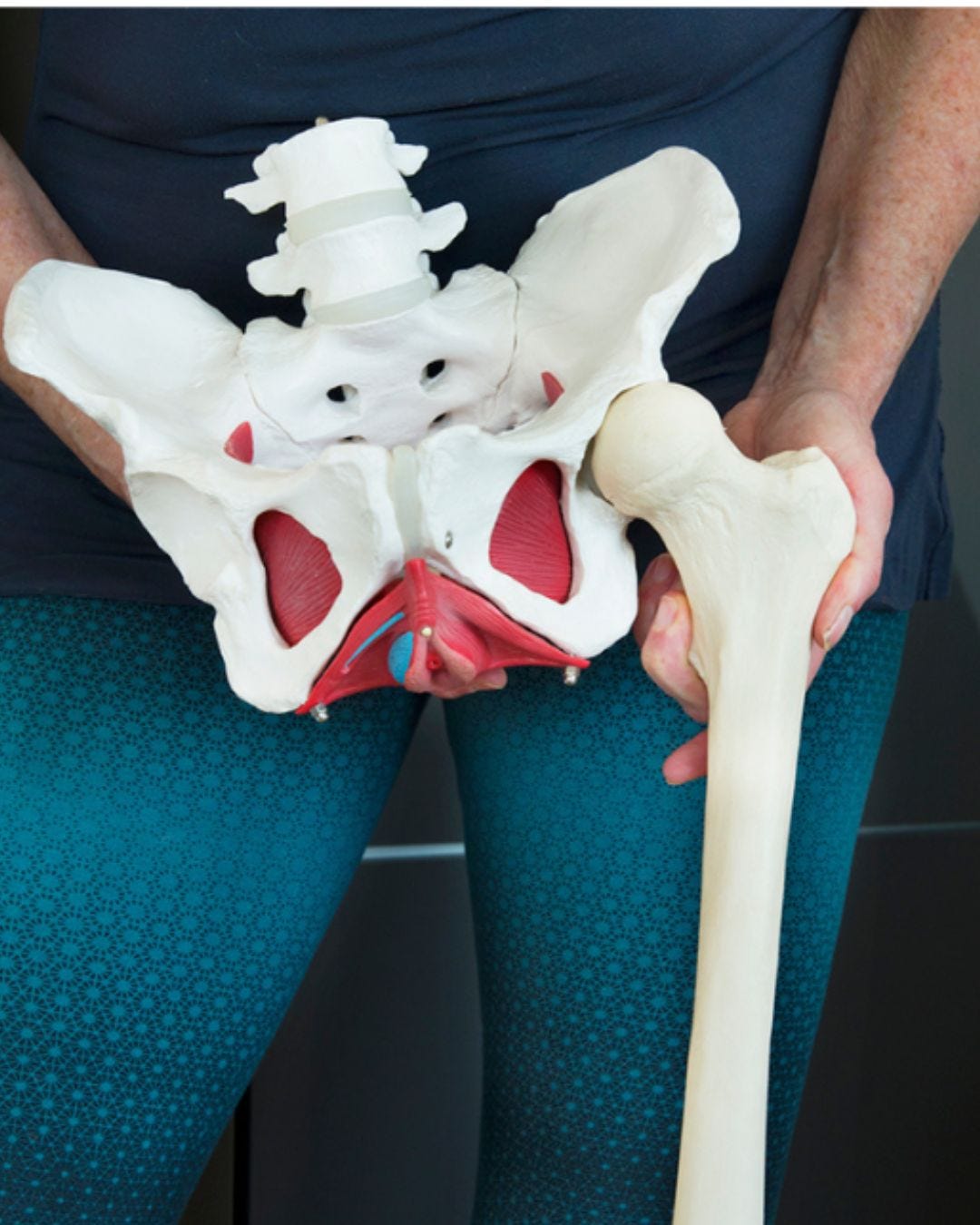
Lately, as I’ve been brushing up on pelvic floor anatomy for women in menopause and beyond, it hit me: our pelvic floor is a lot like those grocery bags.
Let’s compare:
A paper bag tears when you load it up.
A plastic bag stretches, adapts, and then recoils.
You want a pelvic floor that behaves like that adaptable plastic bag , not the rigid paper kind.
This is where most of us were misled.
We learned that Kegels were the gold standard “fix” for everything down there. But if your pelvic floor is already acting more like paper than plastic? Constant squeezing is the opposite of what you need. It cuts off the blood flow and where there is not blood...nothing good happens.
And in fitness, especially certain schools of Pilates , the cues often reinforce this over‑tightening:
🤰🏼Pull your belly in.
🏋🏻♂️Lift the pelvic floor.
🪗Squeeze everything.
🤝Hold it.
🤝Hold it more.
That’s how you create a paper pelvic floor, not a resilient one.
And let’s be honest: Joseph Pilates never had access to modern research on women’s bodies. Female-specific studies weren’t even done until the early ’90s. So the old cues around “pull everything up and in” aren’t exactly aligned with how women’s pelvic floors function, especially post‑menopause. And yet most women are still being taught this one size fits all approach to pelvic health...
Here’s the truth:
Your pelvic floor needs movement.
It needs coordination with your diaphragm.
It needs strength ... yes...but it also needs elasticity.
Too much tension can contribute to hip pain, constipation, low back issues, leaking, and more.
As Pema Chödrön says: “Not too tight, not too loose.”
That’s the heart of effective core training for women in menopause:
-Awareness of tension.
-Learning to release and to engage.
-Reconnecting your breath, pelvic floor, abdominal wall — and yes, even your jaw, because they’re all linked.
Most women were never taught this. And unless you are a nutty movement nerd like me...you wouldn't know either.
That’s why this is exactly where we begin in Pilates for Menopause, starting next Tuesday.
You’ll get:
• Exercises that help you tune into this crucial mind–body connection
• Cueing that builds awareness rather than gripping or bracing
• Myofascial releases that soften the tissue around your pelvis and core, improving circulation and muscle activation
If you want a strong, adaptable, long-lasting body — one that supports you through your 60s, 70s, and beyond — this is the foundation.
No fluff.
No outdated cues.
Just science‑based, evidence‑informed Pilates created for the realities of menopause.
If you are interested send me a message and I'll send you a link to the program. Space is limited and there's already been a lot of interest. Booking opens today
https://heatherdennisonline.heymarvelous.com/product/93830.